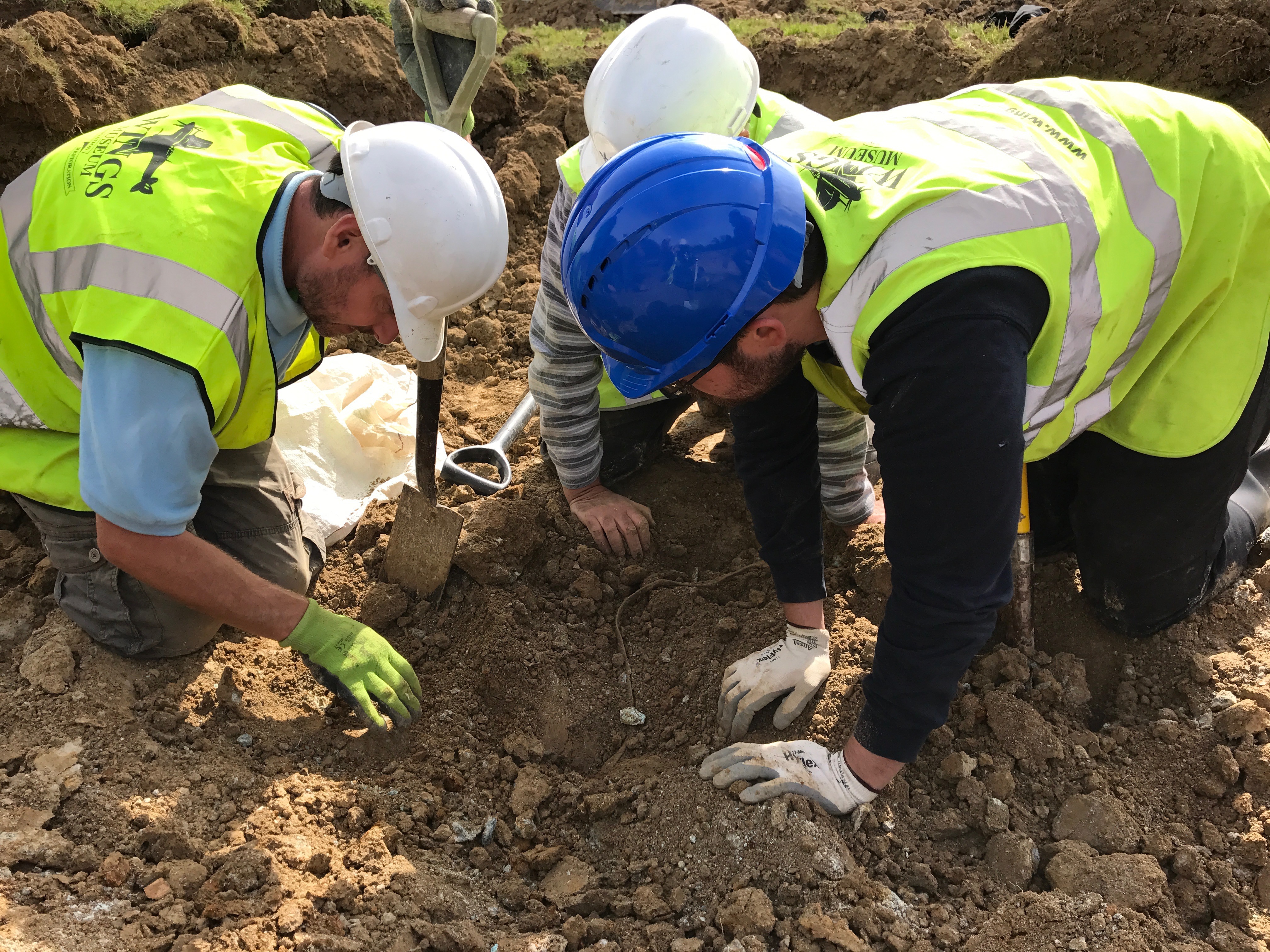
The Wings Museum is one of only a handful of recovery teams that is actively part of a museum.
We feel it is important that our findings are displayed to the public so that the stories and histories we unearth can be shared for all to see.
What is Aviation Archaeology?
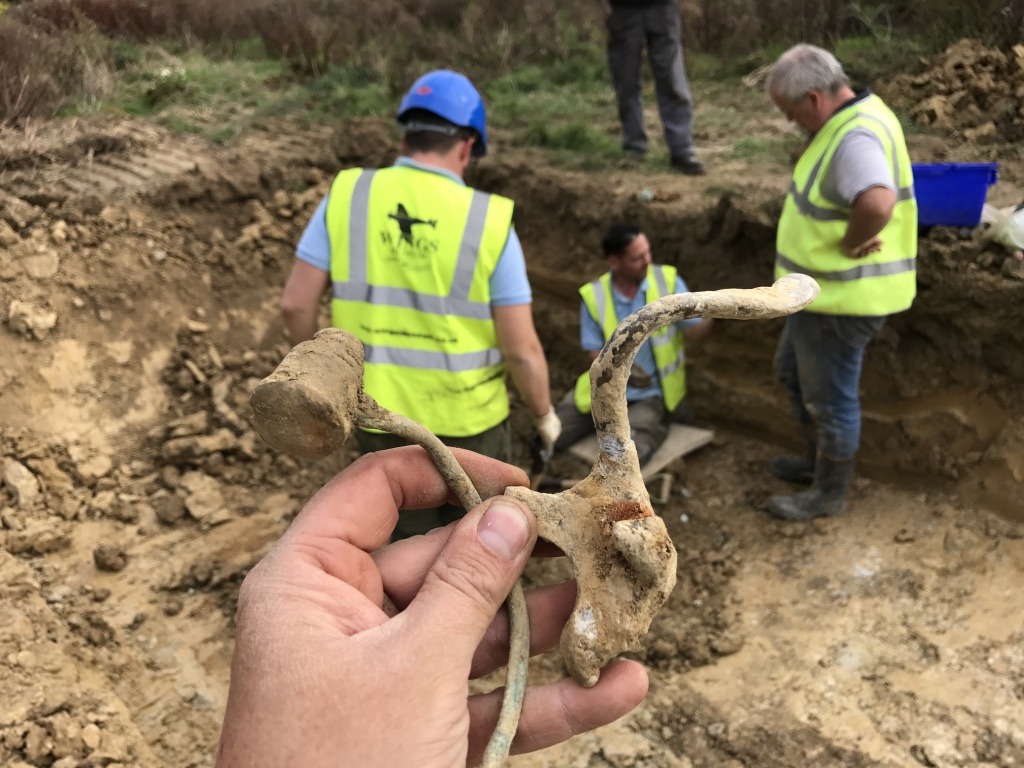
Countless aircraft fell to earth during World War 2, but remarkably few of the crash sites were accurately documented.
Most of the wreckage was taken away at the time or salvaged for scrap, but occasionally it has been possible to recover the remains of a crashed aircraft.
Such items as Engines, Propellers, Under-carriage, Tyres, Instruments, Controls and many more fascinating artefacts can be recovered. If the ground conditions are such, then it is possible for an aircraft to penetrate the ground 30 feet or more.
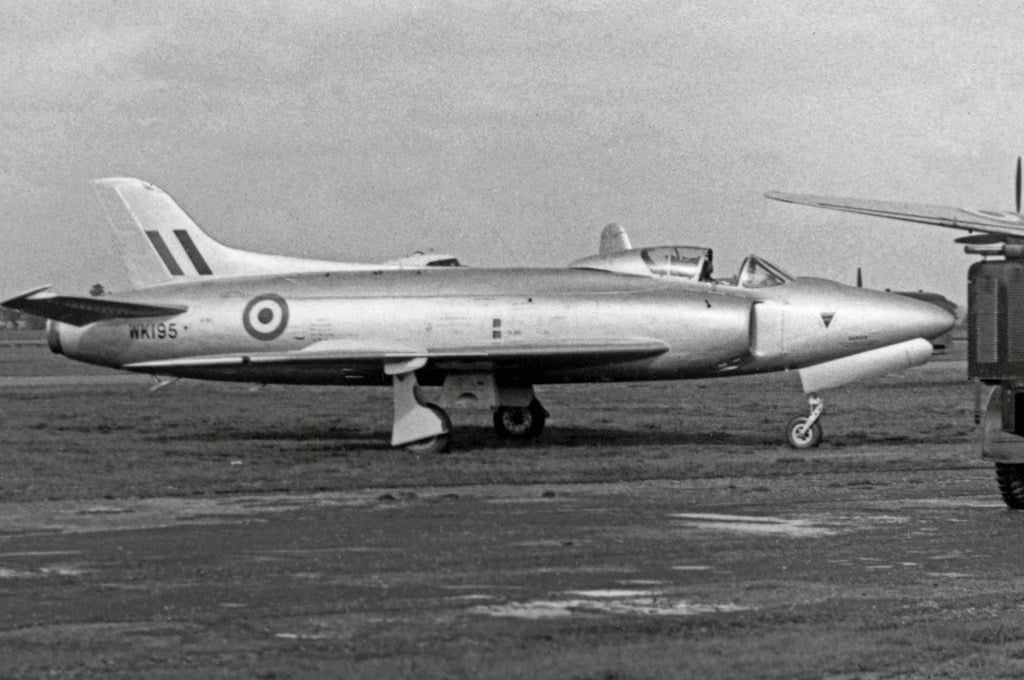
Supermarine Swift F4 WK272
Details: Report on excavation by the Wings Museum 15th June 2020. On Saturday 15th June 2020, a team from the Wings Museum gathered at the crash site of an experimental […]
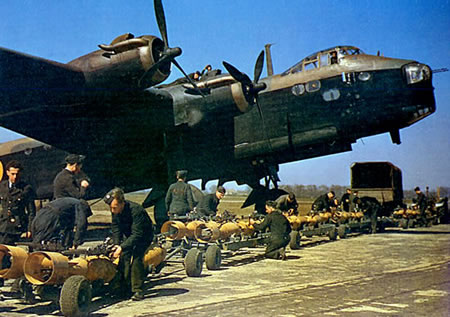
Short Stirling BF479 E for Easy 149 Squadron
Short Stirling III BF479 OJ-E of 149 Squadron took off from RAF Lakenheath in England on the night of the 13th/14th March 1943. Its mission that night was to bomb […]
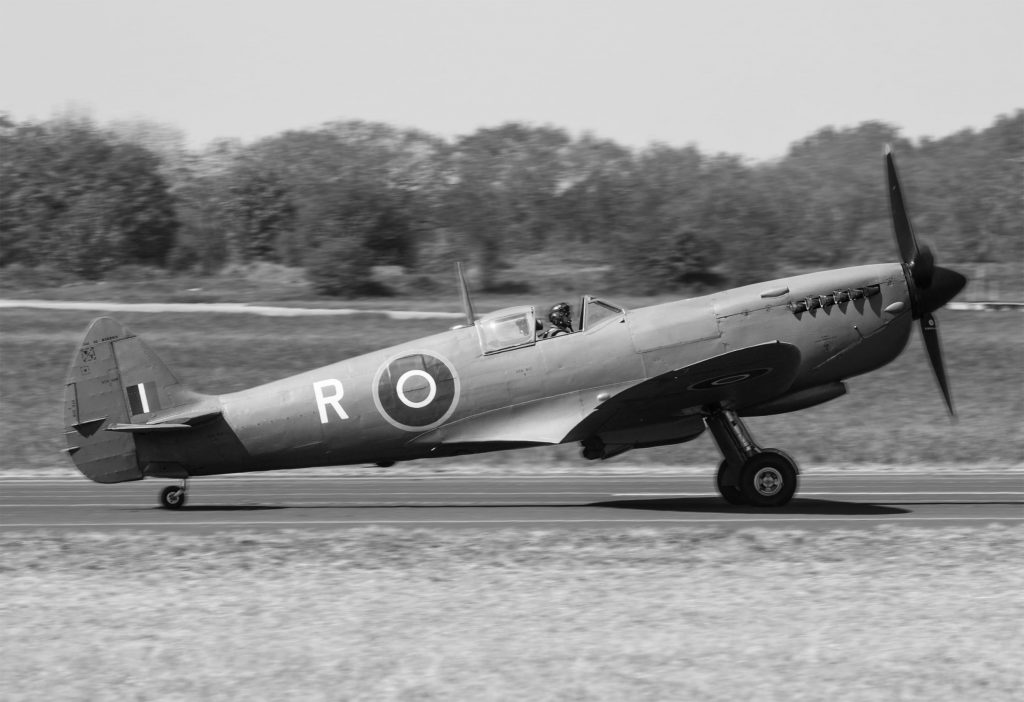
Spitfire XI PA929
Details: Aircraft: Spitfire XI PA929 Pilot: Michael Aidan McGilligan 16 Squadron (PRU) Lost: 8 June 1944 Location: Bletchingley, Surrey UK Background information: Spitfire PA929 from No. 16 Squadron, based at […]
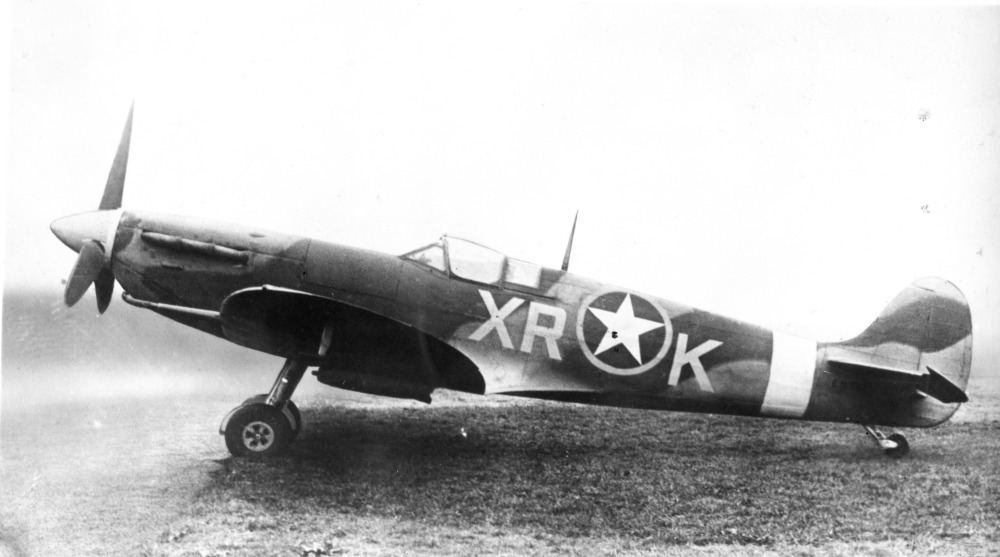
Spitfire Vb EN864 USAAF
With thanks to all those who helped with the excavation and the MOD for their co-operation. We’d also like to thank to AFHRA/RSA Air Force Historical Research Agency, Maxwell Air […]
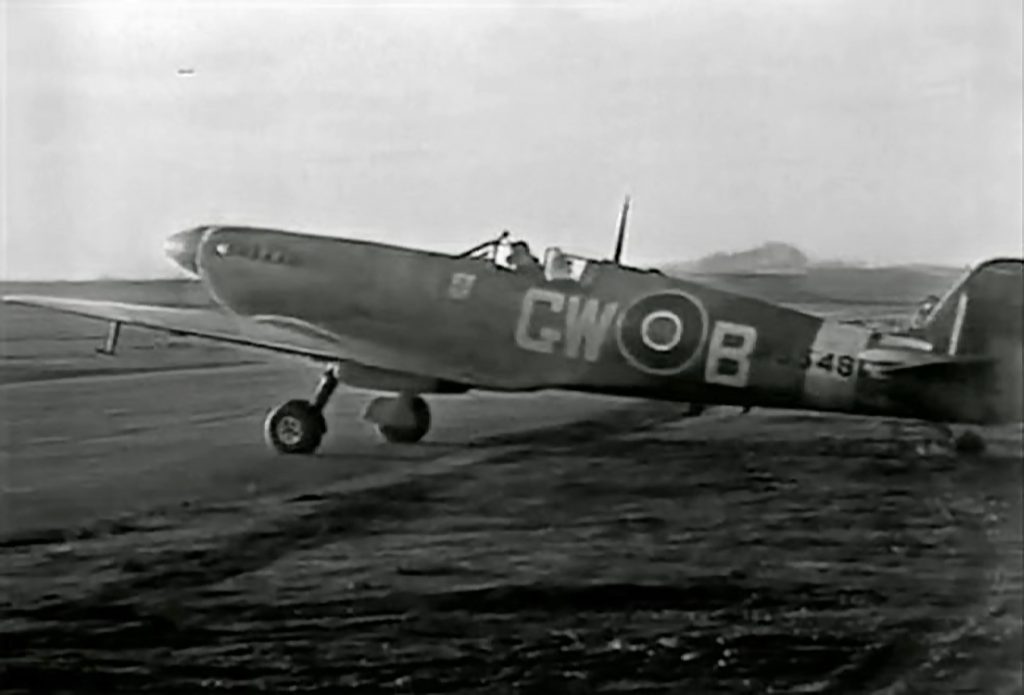
Spitfire IX BS548
Details: Aircraft: Spitfire IX BS548 Pilot: Lieutenant Claude Raoul-Duval 341 ‘Alsace’ Squadron – Biggin Hill Lost: 17 April 1943 Location: Tancarville, France Spitfire IX BS548, 341 ‘Alsace’ Squadron, piloted by […]
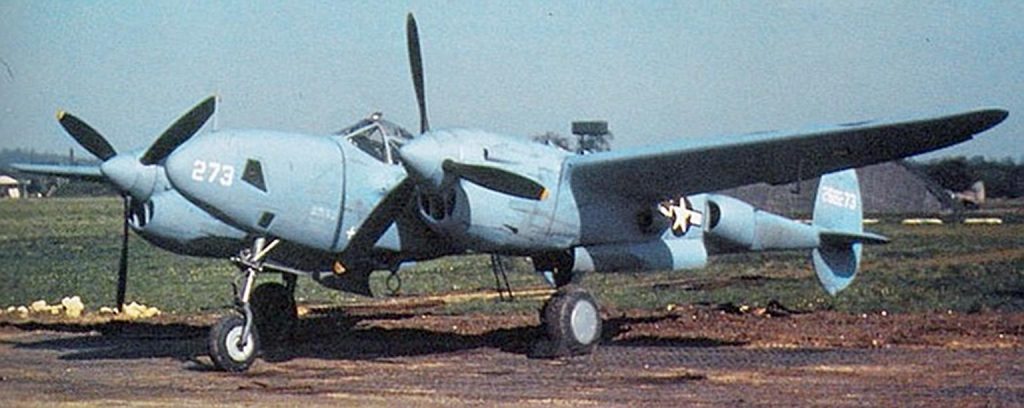
Lockheed P-38 Lightning F-5C 42-67245
Details: Aircraft: P-38 F-5C 42-67245 Pilot: Lieutenant Ernest E Johnston 27th Photographic Reconnaissance Squadron of the 7th Photographic Reconnaissance Group – 8th US Army Air Force Lost: 6 April 1944 […]
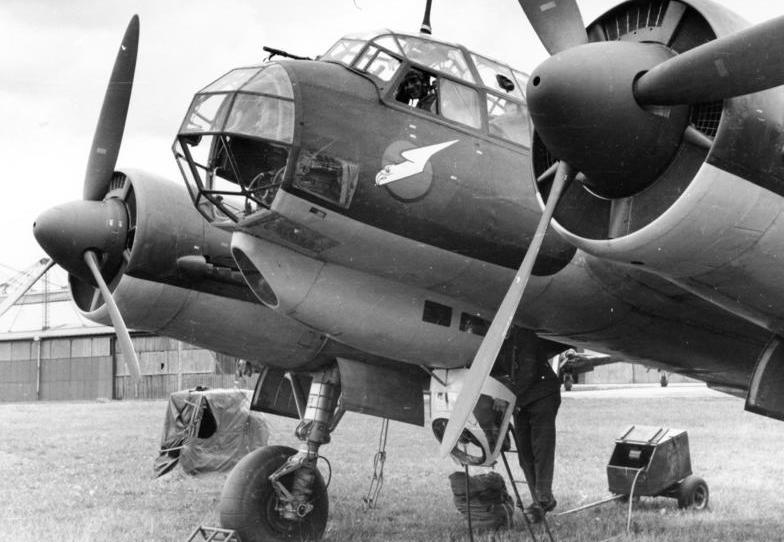
Junkers Ju-88A-14 Werk Nr. 140099
Details: Mission: To bomb London (The Little Blitz of 1944). Date & Time: 14/15th March 1944, 23.05 hours Unit: 6 Staffel/Kampfgeschwader 30 Type & Werk Nr: Junkers Ju 88A-14 140099 [...]
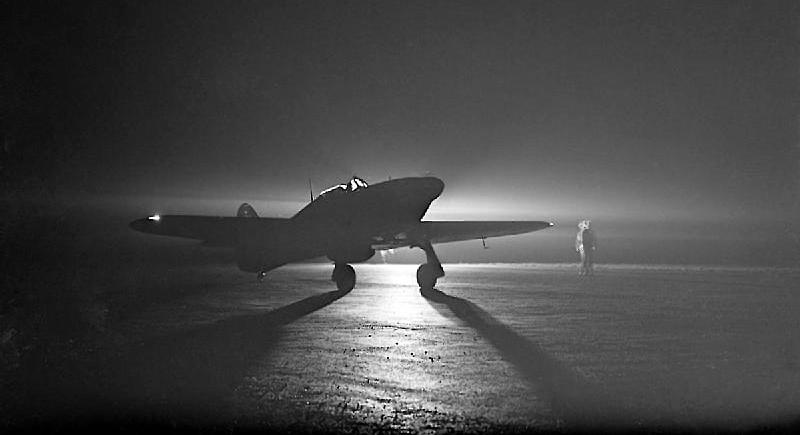
Hawker Hurricane Mk1 V6621 – 253 Squadron RAF Kenley
On 28th September 1940 Pilot Officer Richard Courtney Graves was in combat over the south of England flying Hawker Hurricane Mk1 V6621 from 253 Squadron based at RAF Kenley. He […]
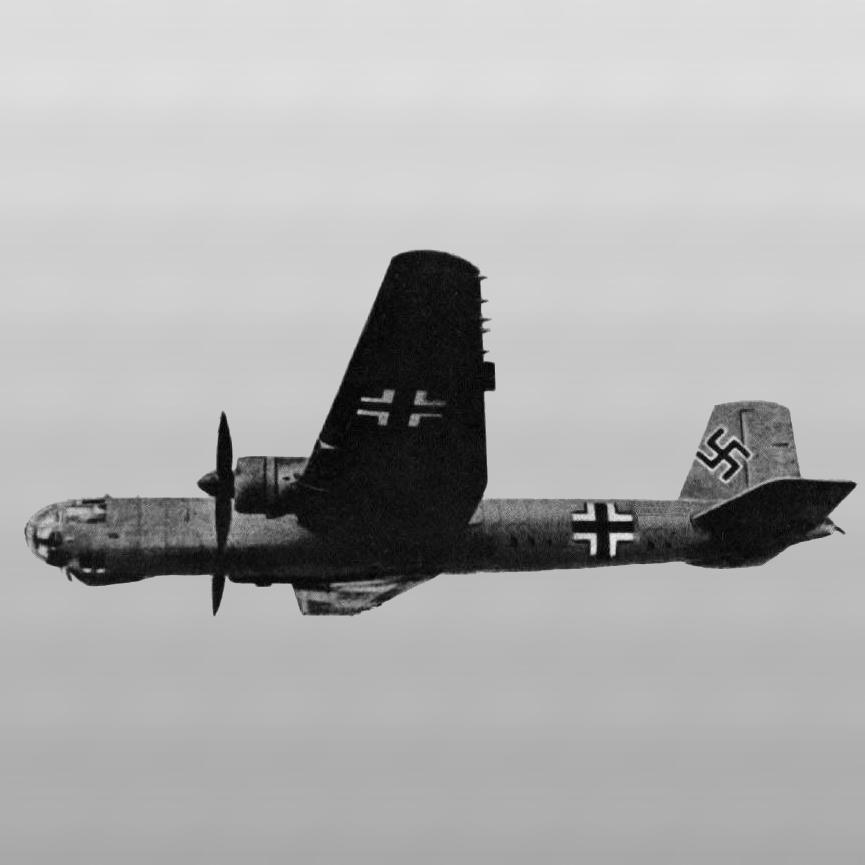
Heinkel He177A-5
Heinkel He177A-54/KG40Ofw Werner Neuenfeld and crew (baled out)Crashed 13 June 1944Nr Bolbec, France On 12th June 1944 Ofw Werner Neuenfeld and crew took off from Toulouse to attack invasion shipping […]
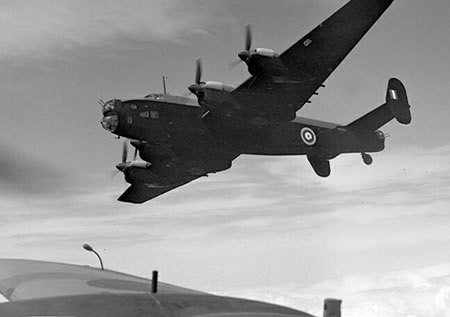
Halifax II JN920 ‘LK-L’ 51 Squadron RAF – Excavation
22nd October 1943 – 51 Squadron RAF Snaith, Yorkshire Sgt. Hall (RCAF) and the rest of his crew climb aboard Halifax JN920 for the last time. Having just completed a […]
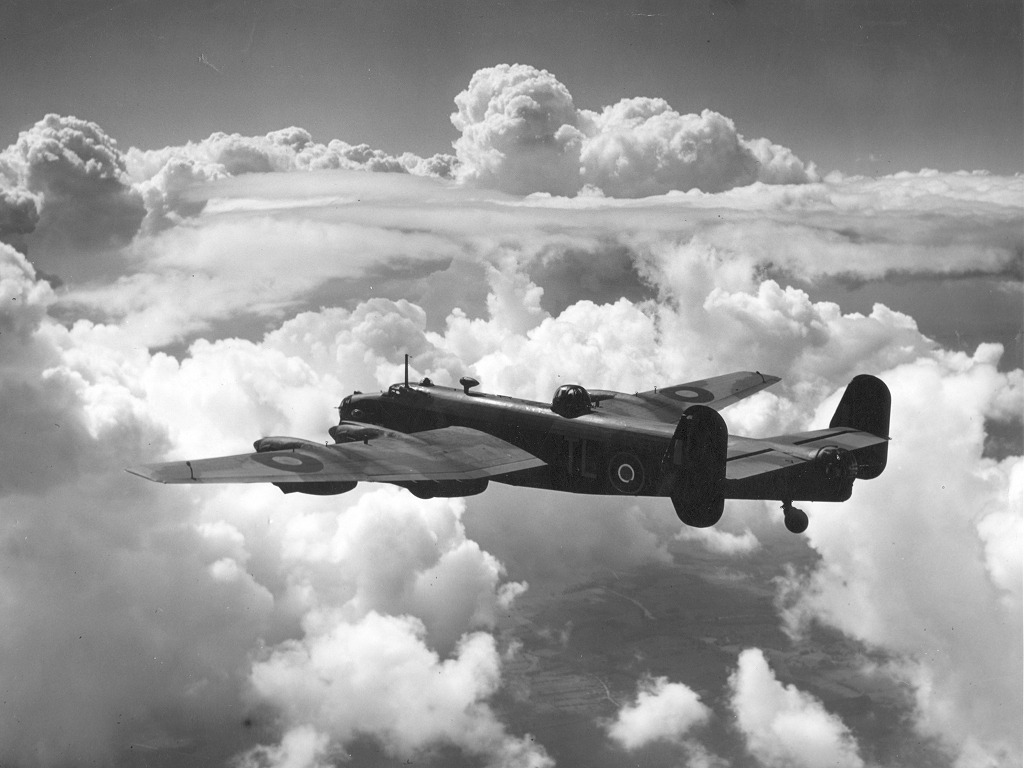
Halifax II HR796
2010 Excavation of Handley Page Halifax II HR796 Crash Location: Private Land near Chailey, East Sussex. Squadron: 1656 Heavy Conversion Unit Operational Details: Lost during night training flight Date of […]
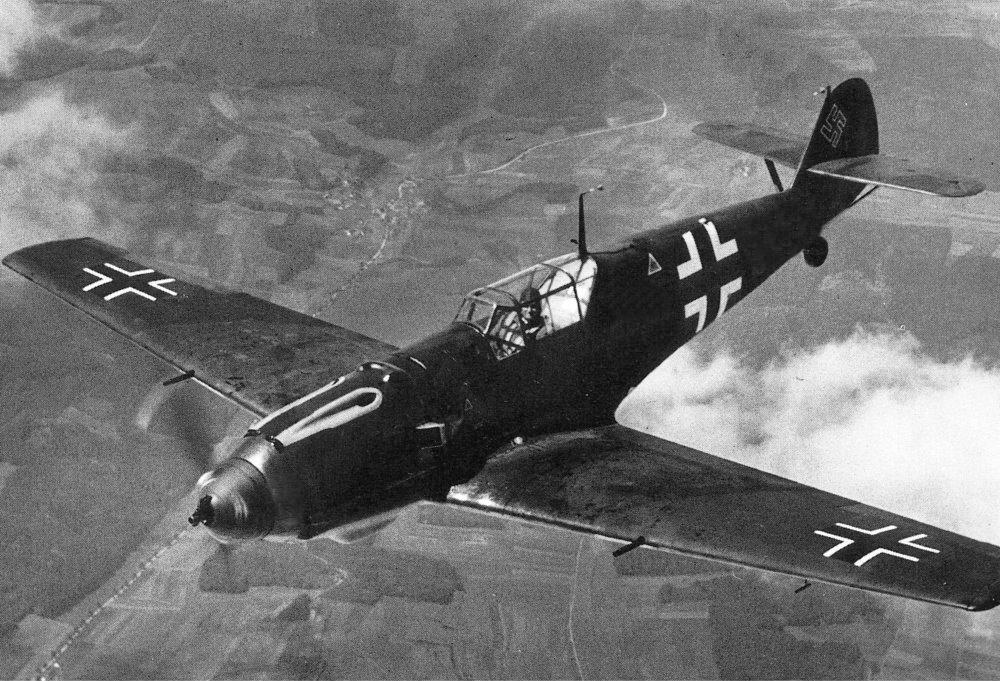
Bf109E-4 Werk Nr. 1531 – 4/JG53
Excavation of Messerschmitt Bf109E-4 Werk No. 1531. by the Wings Museum Saturday 9th December 2017. MoD Licence Number 1848. On Saturday 9th December 2017 a team from the Wings Museum […]
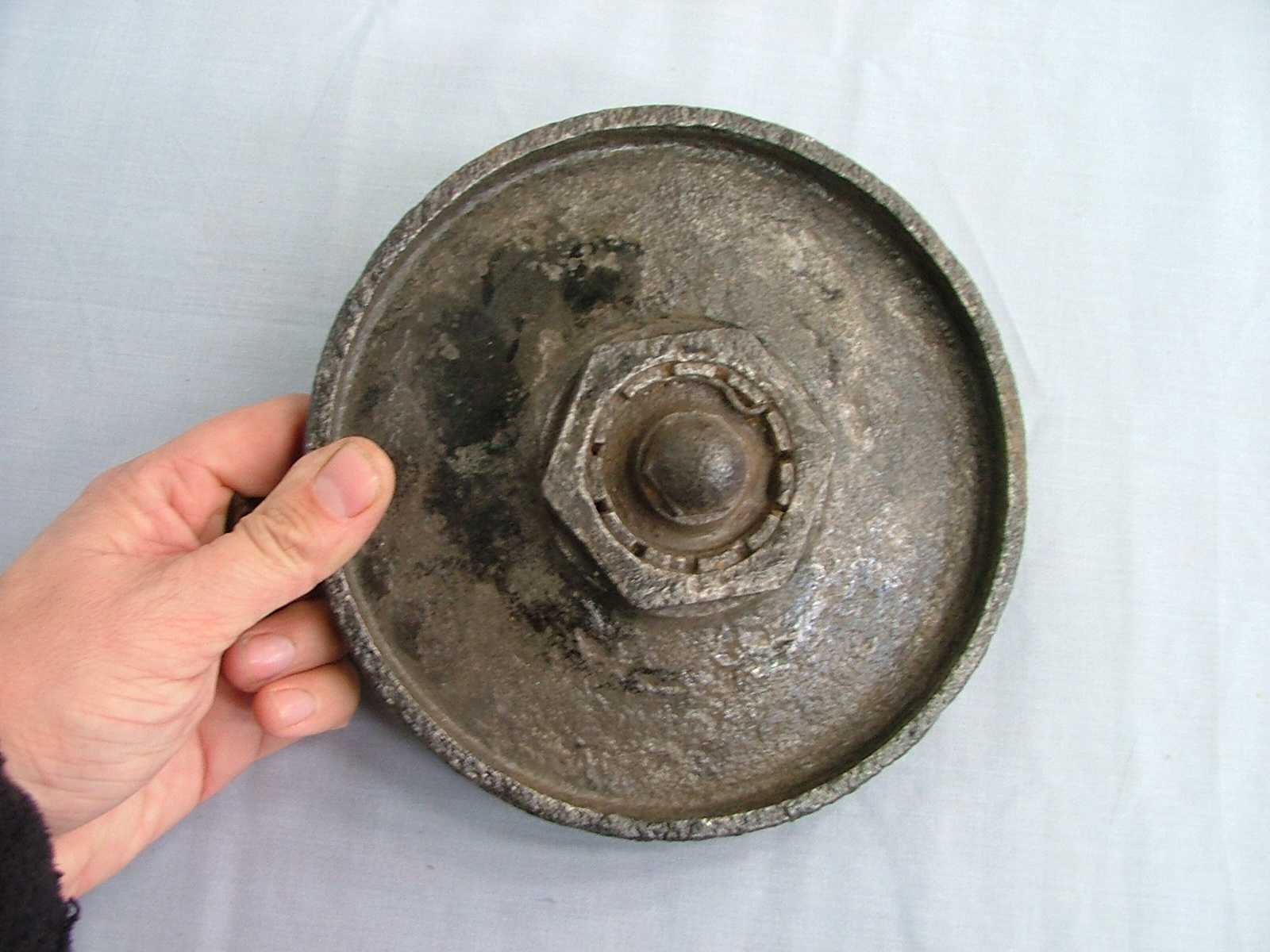
Beaufighter Mk1F R2065 – Finds
Below are a few of the parts recovered during our various investigations at the crash site. Beaufighter R2065 Memorial Dedication >
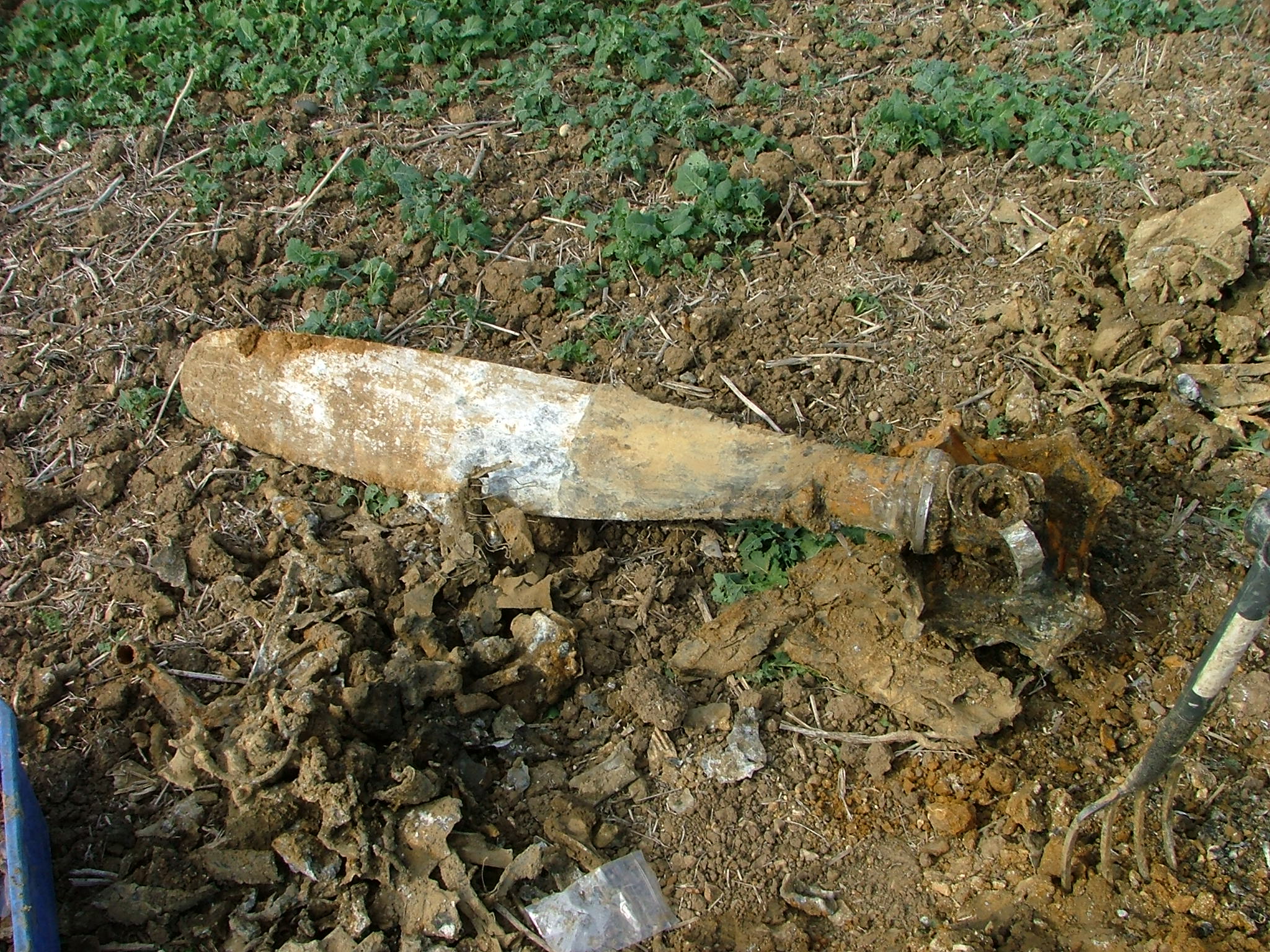
Investigation & Recovery of Mustang FX876 15th September 2007
A minutes silence was observed by the team as a remark of respect to the Aleksander Pietrzak who was thrown from the aircraft during the dive and was found several […]

Mustang III – FX876
Pilot: Warrant Officer Aleksander Pietrzak (P783147) – Tragically Killed
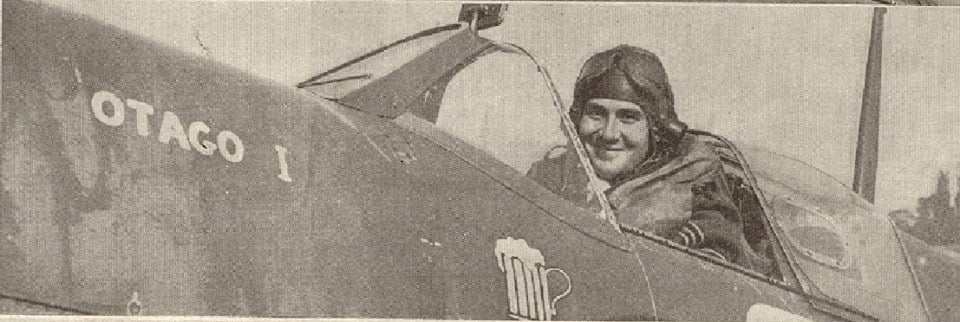
Spitfire Mk1A P9375 – 53 OTU from RAF Heston
P9375 Crashed at Toovies Farm near Horley in Surrey. Sgt. W.M. Krebs (NZ402194) RNZAF New Zealander bailed out, aircraft spun into the ground.
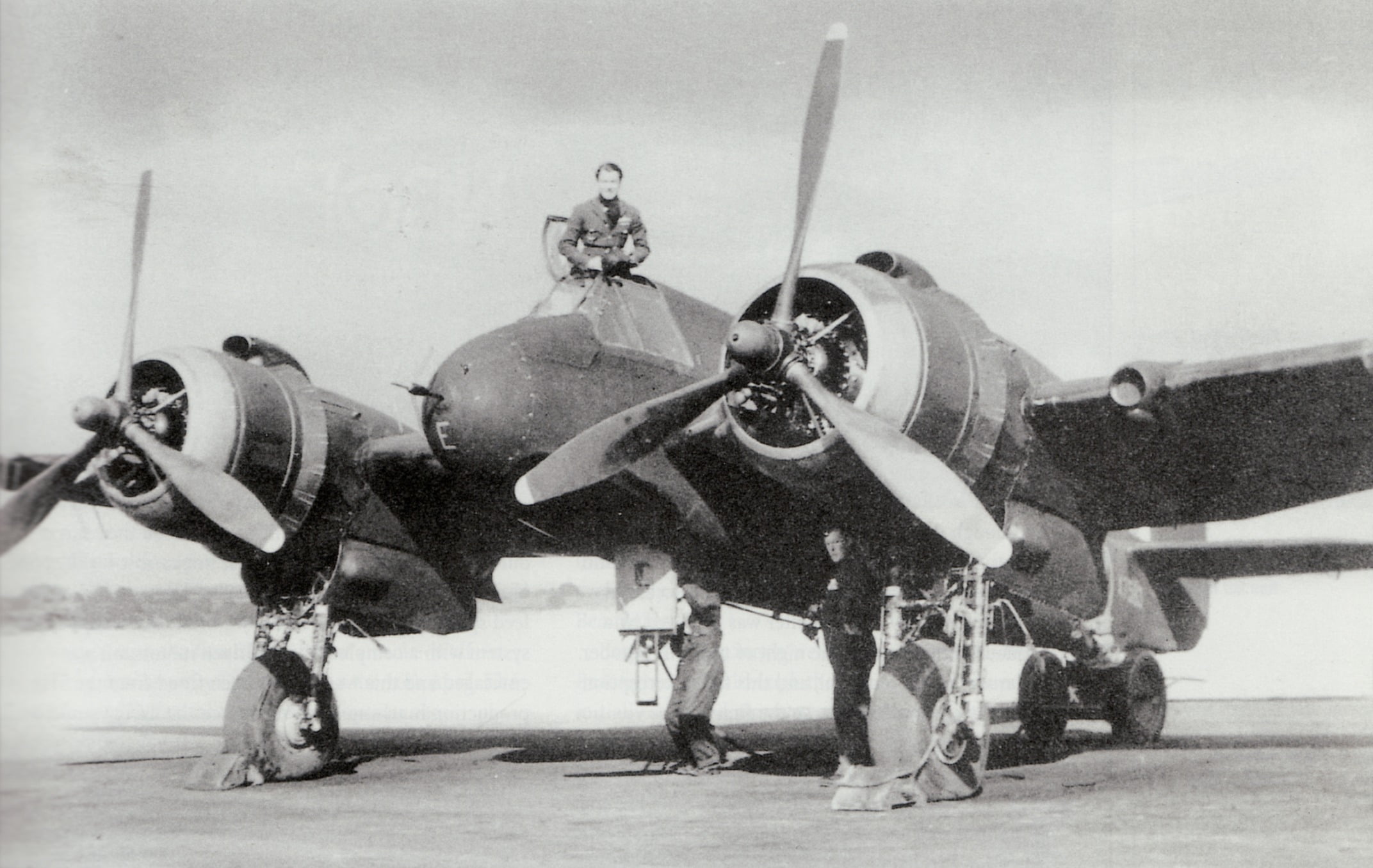
Beaufighter Mk 1F R2065
Marking the 75th Anniversary of the crash of an RAF Redhill based Bristol Beaufighter Mk1f that crashed in the night 30th of October 1940 when the aircraft hit trees on high ground […]
Wings Museum Excavations…
All of the Wings Museum’s excavations are performed with the correct permissions and licences. It is not without hours of extensive research, and gathering of information from archives and eye-witnesses, that an excavation can be carried out.
The Wings Museum have a proud record of leaving the land in an “as found” state after a particular recovery is completed. We are particularly thankful to the co-operation of an otherwise busy farmer or landowner that makes a recovery possible. It is vital that an effort is made now to accurately record these events before the stories are lost forever.
The Wings Museum carries out all of its excavations in a safe and professional manor and is fully insured for its recovery operations. Occasionally a local Archaeology Group is invited to take part and in most instances some representative parts are left for display in public places within the area of the recovery.
Each investigation we undertake is fully researched beforehand, and with this stage complete it is then possible to begin the long process of locating the exact point of impact.
Once an approximate area is located we then call in deep searching equipment which locates any deeply buried wreckage and pinpoint it to within a few inches. This prevents any unnecessary digging and keeps disturbance to a minimum. The team will then begin the process of gaining appropriate permission from the Ministry of Defence, and once this is in place it is then possible to carry out the excavation, normally spread over a long weekend.
As soon as parts begin to emerge, preservation techniques are employed to prevent paint from flaking and steel items from rusting. Once the artefacts are safely back at the Museum, the laborious process of identification, preservation and cleaning can be carried out. With this vital work completed the parts are then labelled and displayed within the museum along with the story of the pilot and air crew together with the history of the final flight.
Aircraft parts recovered by the Wings Museum bring us the provenance that is so important with these historical artefacts. Unfortunately, on the open market, these aircraft parts could be sold to collectors, and, in some cases, even parts that have long since lost their history have been offered for sale with a newly created history associated with them. The aircraft parts Wings Museum has recovered are on display in the museum for all to see.
The Law…
The Ministry of Defence (MoD) has instituted a scheme of ‘Licences’ which they grant upon a request from a recovery group or museum. All crash sites in the UK are protected by the Protection of Military Remains Act and it is illegal to recover aircraft parts without an MOD Licence. This act prevents individuals interfering with any military remains without proper MoD permission.